May 1, 2026
How Long Does Esthetics School Take
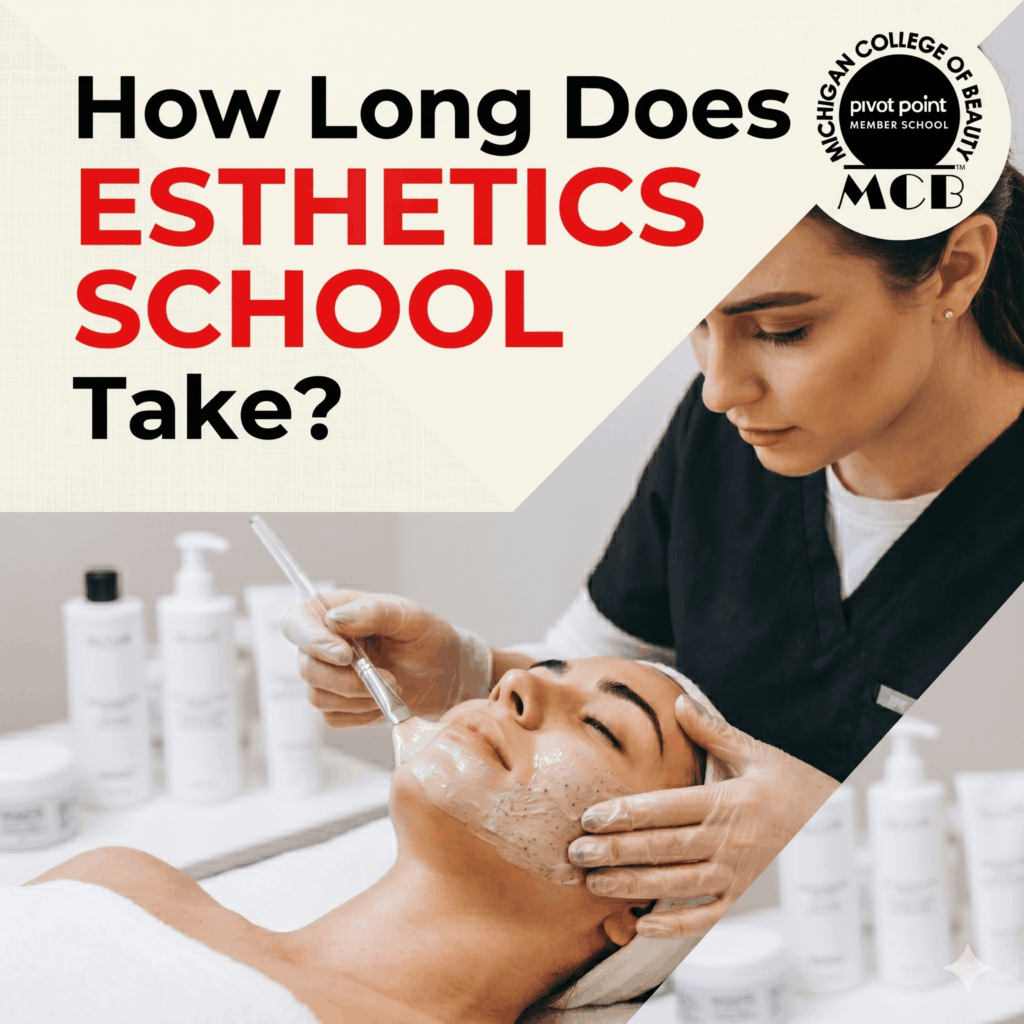
Esthetics school in Michigan requires 750 training hours, which at Michigan College of Beauty can be completed in as little as 6.5 months depending on your schedule.
If you’re interested in a career in skincare, you might be wondering how long it takes to become a licensed esthetician. Compared to many other paths, esthetics training can often be completed relatively quickly, letting you begin working in the beauty industry sooner than you might expect.
What Is Esthetics School?
Training programs typically combine classroom instruction, hands-on practice, client services performed in a supervised environment, and professional product and equipment training. Some of the topics commonly covered include:
Esthetics school is a training program designed to teach students the knowledge and practical skills needed to work in professional skincare. Estheticians specialize in treatments that help clients maintain healthy skin and improve their overall appearance.
- Skin analysis
- Facials and skincare treatments
- Hair removal techniques
- Makeup application
- Sanitation and safety practices
- Product knowledge
- Client consultation skills
By the end of your program, you should have a foundation of both technical skills and professional knowledge to help prepare you for a role in skincare.
How Long Does Esthetics School Take?
The length of esthetics school can vary depending on state requirements and the school you attend. Each state sets its own licensing requirements, including the number of training hours students must complete before they can sit for their licensing exam. In Michigan, esthetics programs typically require 750 training hours.
At Michigan College of Beauty, students complete these 750 hours of training, which can be finished in as little as 6.5 months depending on your schedule. That means you could move from the classroom to the beauty industry in a relatively short amount of time compared to many other professions. The exact timeline can still vary depending on several factors.
What Factors Can Affect Your Esthetics School Timeline?
- Full-time vs. part-time schedules: Full-time schedules often allow students to complete their training faster; part-time schedules may take longer but provide more flexibility for those balancing work, family, or other commitments.
- Attendance and consistency: Because esthetics programs are based on clock hours, consistent attendance matters. Missing class frequently can extend your timeline because you must still complete all required training hours.
- Personal learning pace: Every student learns at their own pace. Some feel comfortable mastering techniques quickly, while others want additional practice to feel confident.
What Can You Learn During Esthetics Training?
At Michigan College of Beauty, the 750-hour program is designed to give students a well-rounded foundation in skincare and beauty services, often including:
- Skincare and facials: Analyzing different skin types, customizing treatments, performing cleansing and exfoliation, and recommending skincare products.
- Hair removal techniques: Facial waxing, brow shaping, body waxing basics, and proper sanitation and client comfort techniques.
- Makeup application: Applying makeup for different skin tones and face shapes, creating natural and special-event looks, and recommending products.
- Sanitation and safety: Proper sanitation procedures, infection control, tool and equipment cleaning, and state safety regulations.
- Client communication and consultations: Conducting professional consultations, asking the right questions about skin concerns, and building lasting client relationships.
What Happens After Esthetics School?
After completing your training hours, the next step is typically to sit for the state licensing exam, which usually includes a written portion testing your knowledge of skincare theory and safety practices, and a practical portion evaluating your hands-on skills.
Once you meet all state requirements and complete the required exams, you can apply for your license, which allows you to legally provide skincare services in the state.
Where Can Estheticians Work After Licensing?
- Salons
- Day spas
- Medical spas
- Resorts
- Skincare clinics
Depending on your interests, you might focus on facial treatments, acne care, anti-aging skincare, makeup artistry, waxing and hair removal, or product sales and consultations. Some estheticians eventually specialize further or continue their education in related beauty fields.
Tips for Succeeding in Esthetics School
- Stay organized: Keep track of assignments, practice hours, and supplies.
- Practice your skills: Hands-on practice is one of the best ways to build confidence.
- Ask questions: Instructors are there to help guide you and deepen your understanding.
- Build professional habits: Punctuality, sanitation, and customer service help prepare you for success after graduation.
Ready to learn more? Visit our admissions page.
Financial Aid is available to those who qualify, and our admissions team can help you choose the schedule that fits your 750-hour timeline.
Next step: If you’re passionate about skincare and interested in joining the beauty industry, esthetics school could be your first step. Contact us to explore the esthetics program, ask questions, or schedule a tour.
Frequently asked questions
How many hours does esthetics school require in Michigan?
Michigan requires 750 training hours for an esthetics program.
How fast can you finish esthetics school?
At Michigan College of Beauty, students can complete the 750-hour program in as little as 6.5 months depending on their schedule.
What topics does esthetics training cover?
Skin analysis, facials, hair removal, makeup application, sanitation, and client consultation skills.
Where can estheticians work after licensing?
Salons, day spas, medical spas, resorts, and skincare clinics are common places licensed estheticians work.